Ammonihah
Book of MormonAmmonihah is a Nephite city north of Melek whose history is defined by confrontation, persecution, and destruction. Alma the Younger reached it after traveling three days from Melek, and the city’s later annihilation—every living soul of the Ammonihahites being destroyed—turns the place into one of the clearest geographical and moral landmarks in the narrative. Ammonihah stands where missionary movement, communal resistance, warfare, and divine judgment meet.
Setting and Geographical Place
Ammonihah is introduced as a city reached by Alma the Younger after he had completed his work at Melek. He traveled for three days northward and came to the city, establishing Ammonihah as part of the northern landscape of Nephite territory rather than as an isolated or legendary place. Its position matters because Alma’s arrival is presented as purposeful movement through a connected land: preaching begins in one place, continues along a route, and encounters a new civic community with its own response to the word of God.
The city also belongs to a wider territorial system shaped by migration, division, and conflict. The record describes the Lamanites and the Nephites as divided by a line running from east to west, while later accounts describe populations spread across wilderness and settled lands. Within that broader geography, Ammonihah represents a settled Nephite center exposed to both internal religious conflict and external military danger. Its fate therefore cannot be separated from the unstable political and spiritual boundaries surrounding the Nephite and Lamanite lands.
Conflict Within the City
Ammonihah becomes a scene of direct resistance to Alma the Younger and Amulek. The opposition does not remain a disagreement over teaching. Alma and Amulek are cast out, and men are sent to cast stones at them. The violence shows that the city’s rejection of the message has become organized persecution, directed not only at the preachers but also at those who had believed or had been taught to believe in the word of God.
The city’s persecution also gathers households into the conflict. Wives and children are brought together among those targeted by the city’s hostility, making Ammonihah’s opposition communal rather than merely individual. The attack reaches across family lines and exposes the social cost of belief: acceptance of the word places people within a vulnerable minority, while the city’s authorities and persecutors attempt to erase that community through force.
Destruction and Aftermath
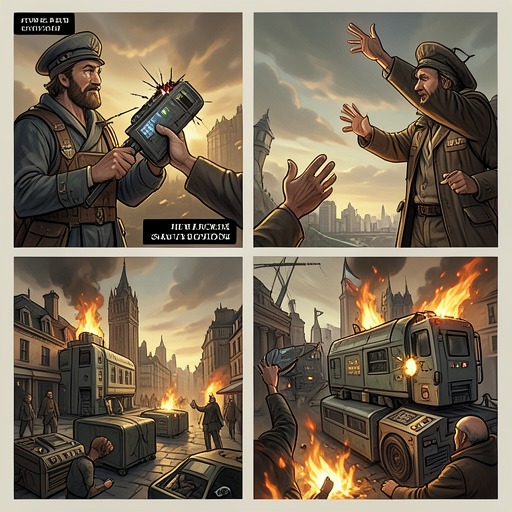
Ammonihah’s destruction follows its confrontation with the missionaries and its treatment of believers. By the end of the eleventh year of the reign of the judges, the Lamanites have been driven out of the land, but the people of Ammonihah have also been destroyed. The record emphasizes the completeness of the catastrophe: every living soul of the Ammonihahites is gone. The city is therefore not simply defeated, occupied, or politically reorganized; its population is extinguished.
This outcome creates a sharp contrast between the city’s initial confidence as a settled Nephite community and its final absence. The same narrative world that records missionaries traveling from one city to another also records cities disappearing under the pressure of war and judgment. Ammonihah’s destruction follows the pattern by which warning, rejection, persecution, and catastrophe become linked, while the expulsion of the Lamanites marks the simultaneous military dimension of the crisis.
Narrative and Thematic Significance
Ammonihah concentrates the Book of Mormon’s larger concern with the relationship between land, covenant, and communal conduct. The record is an abridgment of the histories of the Nephites, Lamanites, and Jaredites, written for the remnant of the house of Israel and for Jew and Gentile to show what God has done for former generations and to affirm that the house of Israel is not cast off forever. Against that broad archival purpose, Ammonihah functions as a local case in which a particular community’s response to revealed teaching acquires historical consequences.
The city also participates in the book’s recurring movement between scattering and gathering. Earlier generations leave Jerusalem, travel through wilderness, and establish new communities; other groups later depart again into the wilderness, while the record repeatedly presents Israel’s future establishment and gathering as part of the divine purpose. Ammonihah reverses the constructive side of that pattern. Instead of becoming a durable center for a people, it becomes a destroyed place whose disappearance warns later readers about the fragility of communities that turn against the word of God.
Because Ammonihah is both precisely located and completely erased, it joins geography to memory. Its three-day distance from Melek fixes it on the map of the narrative, while the death of its entire population fixes it in the moral history of the Nephites. The city’s significance lies not only in what happened there, but in the way its ruins—represented through the record’s act of remembrance—continue to interpret the dangers of persecution, communal pride, and resistance to prophetic warning.